|
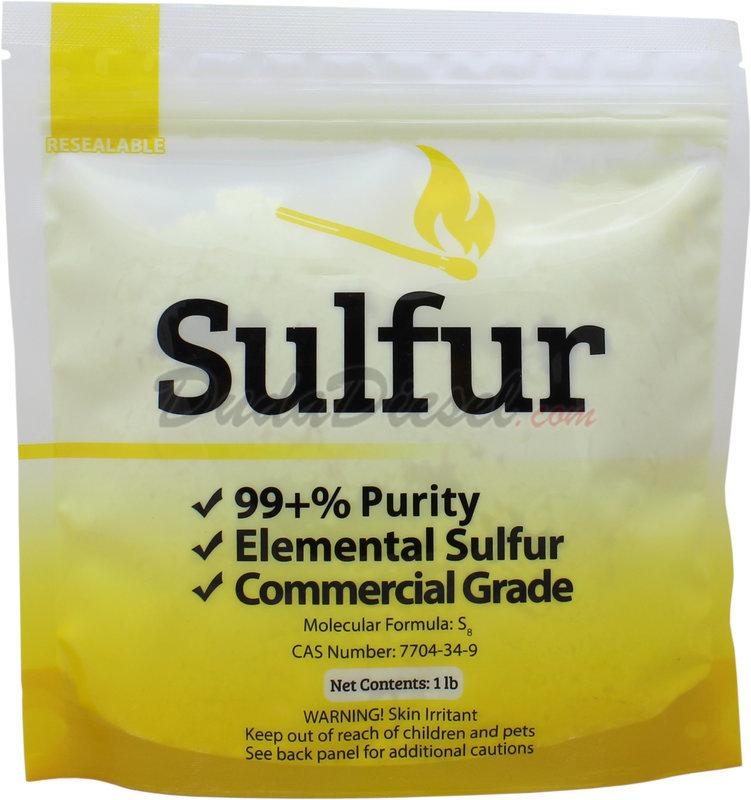
Home Page > Sulfur Powder, 1 lb [sulfur1] |
|
|
| Item Description: |
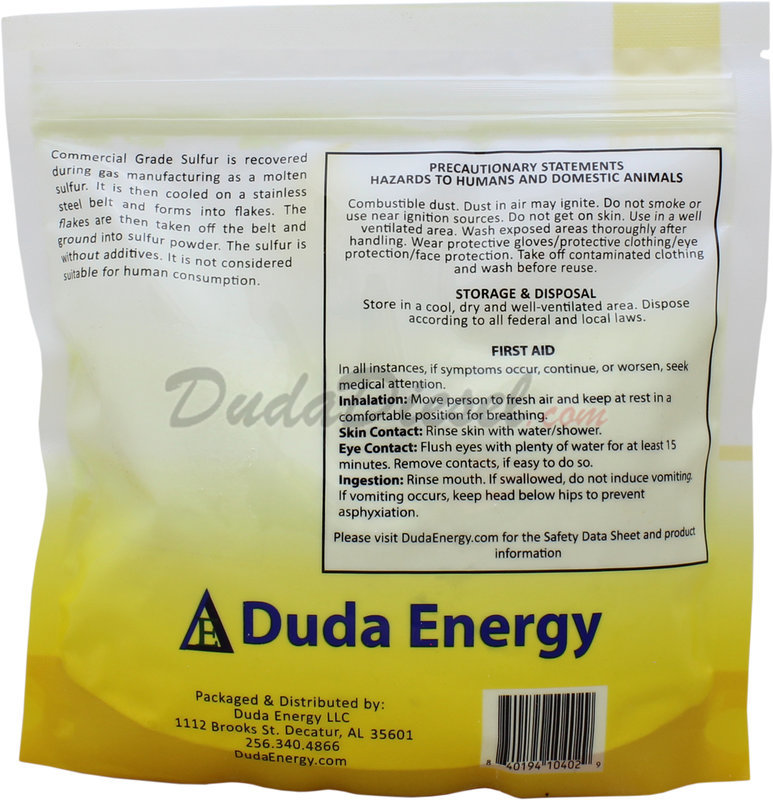
Sulfur powder has a low flammability rating. When burned, it creates sulfur dioxide, a poisonous gas which can kill you and also cause many health hazards if burned in large quantities (acid rain is one of them) In the old days, people used to burn sulfur powder to remove pests and clean out fields. This is not really done anymore and it is strongly recommended to not burn it anywhere near where people live because of the health hazard. In the case of the burning application being necessary, note that pure solid sulfur powder does not burn easily because it requires a lot of oxygen to get that blue flame everyone is looking for. Old time sulfurs which were meant for burning contained oxides mixed in with it to help it burn. The only way to make it burn well is to blast sulfur dust into the air, which is much more flammable because of the better contact with oxygen, or to mix a light amount of oxidizer. We do not recommend burning sulfur powder and are not responsible for any damages to anything or anyone by doing so.
Ground Sulfur Powder
One of the direct uses of sulfur is in vulcanization of rubber, where polysulfides crosslink organic polymers. Sulfur is a component of gunpowder. It reacts directly with methane to give carbon disulfide, which is used to manufacture cellophane and rayon.
Elemental sulfur is mainly used as a precursor to other chemicals. Approximately 85% (1989) is converted to sulfuric acid (H2SO4), which is of such prime importance to the world's economies that the production and consumption of sulfuric acid is an indicator of a nation's industrial development.[18] For example, more sulfuric acid is produced in the United States every year than any other industrial chemical.[citation needed] The principal use for the acid is the extraction of phosphate ores for the production of fertilizer manufacturing. Other applications of sulfuric acid include oil refining, wastewater processing, and mineral extraction.[17]
Sulfur compounds are also used in detergents, fungicides, dyestuffs, and agrichemicals. In silver-based photography sodium and ammonium thiosulfate are used as "fixing agents."
Sulfur is an ingredient in some acne treatments.
An increasing application is as fertilizer. Standard sulfur is hydrophobic and therefore has to be covered with a surfactant by bacteria in the ground before it can be oxidized to sulfate. This makes it a slow release fertilizer, which cannot be taken up by the plants instantly, but has to be oxidized to sulfate over the growth season. Sulfur also improves the use efficiency of other essential plant nutrients, particularly nitrogen and phosphorus.[19] Biologically produced sulfur particles are naturally hydrophilic due to a biopolymer coating. This sulfur is therefore easier to disperse over the land (via spraying as a diluted slurry), and results in a faster release.
Sulfites, derived from burning sulfur, are heavily used to bleach paper. They are also used as preservatives in dried fruit.
Magnesium sulfate, better known as Epsom salts, can be used as a laxative, a bath additive, an exfoliant, a magnesium supplement for plants, or a desiccant.
Specialized applications
Sulfur is used as a light-generating medium in the rare lighting fixtures known as sulfur lamps.
This chemical is not classified as hazardous if shipped domestically by ground mail. It can only be shipped by Fedex Ground. |
| |
|
|
|
|
|
|
Home | View Cart | Check Out | Forums | Contact Us | Affiliate Program
Heat Exchangers | Pumps | Filters | Biodiesel Chemicals | Fluoroelastomer Hose (Like Viton Hose)
Other Chemicals | Cone Tanks | Solenoid Valves | Solar Water Heaters
|
|