2W Solenoid Valves
A two way solenoid valve means that there are 2 ports in which fluid flows from/to. The Direct Acting valves will stop flow in either direction, but are still only designed to allow full flow in a single direction. Semi-Direct acting valves require assitance from fluid flow to open.
These 2W valves may be used with 0 psi working pressure. However, while they do not require pressure from the working fluid to remain open or remain closed, these semi-direct lift valves do require some assistance from the flow of the working fluid for the initial opening/closing. Some gravity flow applications may have trouble overcoming the static friction of the seals within the valve while initially opening or closing and therefore the valve may not function properly in some low flow or low pressure applications.
General purpose 2-way direct acting and semi-direct lift acting valves. Common applications include water, oil (below 20cst), air, gas, freon, *vacuum, weak acids & weak alkali. Check chemical compatibility charts for the valve body and seals of the valves to see if they are compatible in the case of using a weak acid/base.
*Only Solenoid valves of 1" ports and smaller are able to operate with full vacuum.
Available in a body/seal material of brass/NBR or stainless steel/viton.
Brass/NBR valves are suitable for water, hot water, gas, air, non-corrosive oils and freon.
Stainless Steel/Viton valves are suitable for hot water, weak acids, weak alkali, chemical salt, oils and hydrocarbons such as *Diesel Fuel.
*Diesel fuel is compatible with Brass/NBR, however, it is known to slightly shrink NBR and with any small shrinkage of the material in the diaphragm, it can cause a solenoid vale to cease in operation. For this reason, we only warranty the stainless steel/viton valves for diesel fuel and similar applications.
Flow of the Valve
The Semi-Direct Lift valves will partially open or close from activation, and require fluid assitance to prop open or closed. They can only stop flow in one direction, which is indicated by the arrow on the body of the valve. If pressure is applied in the opposite direction, the valve will be opened and allow a slow trickle of fluid in the opposite direction. These valves should only be used for stopping flow in one direction. If preventing of backflow is required, a check valve should be placed in the line after the solenoid valve.
Direct acting valves switch on their own with no fluid assitance and can block fluid flow in both directions.
Electrical Connection
The electric coil uses a DIN connector. This connect contains wiring terminals for easy connection and a simple connect/disconnect: Simply unscrew the DIN connector and unplug the valve for service (no need to disconnect the wires from the terminals). The coils are not polarized, which mean that positive/negative does not matter when wiring them. We highly recommend using the ground terminal in the DIN connector to avoid electric shock when touching the valve.
Coil Use
The coils are designed to withstand heat build-up from continuous use as long as they are exposed to ambient and not insulated in order to dissipate heat. Although they can be used continuously without shutoff, it will reduce the life of the coil to operate them constantly. DC valves will experience more rapid heating than AC valves due to the higher amperage required to operate them. The rated maximum power consumption often only occurs when the valve operates near the maximum pressure. When no pressure is applied, the valve's power consumption is about 1/3 of the maximum power consumption.
Limitations of the Larger Valves
For the larger valves (1-1/4" and up), when operating near the maximum pressure, it can take a little longer for them to close than the smaller valves. Because of this, some applications with larger valves may also experience a "fluttering" sound as the valve tries to close against the high pressure.
Valves larger than 1" cannot hold a full vacuum. It is recommended to use the smaller valves for vacuum applications, especially if near full vacuum needs to be achieved.
Working Fluid
The working fluid can be a variety of substances. The fluid must be clean of debris for proper operation of the solenoid valve. If any debris gets into the valve body, it can clog the diaphragm from a complete seal, thus preventing a a successful closure of the valve. In the event of clogging, these valves are easy to clean. Simply remove the 4 bolts holding the body together to access the diaphragm for cleaning.
Model Numbers
Model numbers are listed below for brass, normally closed valves. If stainless steel, a J is to be added after the W. If normally open, a K is to be added before the N.
Solenoid Valve Parameters |
Model |
2W-040-08N |
2W-160-10N |
2W-160-15N |
2W-200-20N |
2W-250-25N |
2W-320-32N |
2W-400-40N |
2W-500-50N |
Thread Connection (NPT) |
1/4" |
3/8" |
1/2" |
3/4" |
1" |
1-¼ |
1½" |
2" |
Orifice Size (mm) |
4 |
16 |
16 |
20 |
25 |
35 |
40 |
50 |
Motion Pattern |
Direct Acting |
Semi-Direct Lift |
Cv Value |
0.6 |
4.8 |
7.6 |
12 |
24 |
29 |
48 |
L |
40.5 |
52.5 |
69 |
73 |
99 |
119 |
123 |
168 |
H |
75 |
90 |
117 |
123.5 |
134.5 |
170 |
172 |
209 |
H1 |
66 |
76 |
101 |
107 |
113 |
143 |
144 |
172 |
Fluid Working Temperature |
Brass/NBR: -5°C - 80°C (29°F - 176°F), Stainless Steel /Viton: -10°C - 130°C (14°F - 266°F) |
Working Pressure |
Voltage |
Normally Closed |
Normally Open |
110v AC or 220v AC |
0-10 Bar (0-145 psi) |
0-5 Bar (0-71 psi) |
12v DC or 24v DC |
0-5 Bar (0-71 psi) |
0-5 Bar (0-71 psi) |
|
Maximum Power Consumption |
Normally Closed Valves |
Valve Size |
12v/24v DC (Watts) |
110v/220v AC (Watts) |
1/4" |
16 |
14 |
3/8" |
19 |
26 |
1/2" |
19 |
26 |
3/4" |
19 |
26 |
1" |
30 |
40 |
1-¼" |
30 |
40 |
1-½" |
30 |
40 |
2" |
30 |
40 |
|
Normally Open Valves |
Valve Size |
12v/24v DC (Watts) |
110v/220v AC (Watts) |
1/4" |
19 |
26 |
3/8" |
19 |
26 |
1/2" |
19 |
26 |
3/4" |
19 |
26 |
1" |
30 |
40 |
1-¼" |
45 |
60 |
1-1/2" |
45 |
60 |
2" |
45 |
60 |
|
|
*Max power consumption typically only occurs during initial activation of the solenoid while the valve opens or closes or during close to max pressure applications. Typical use will usually see 1/3 the amount of power used when a valve is held open/closed continuously.
|
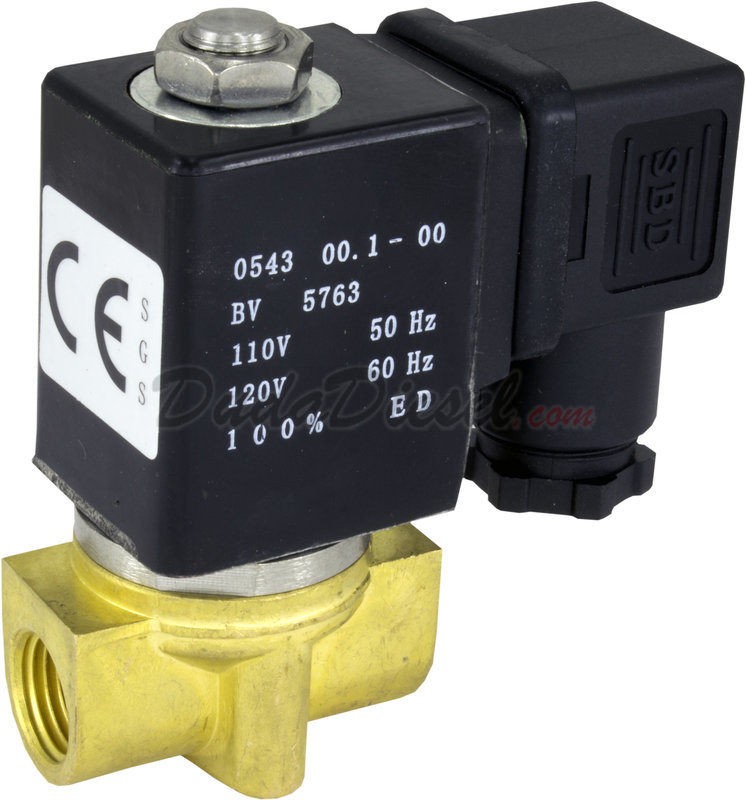 2-way Solenoid Valve normally closed 1/4"
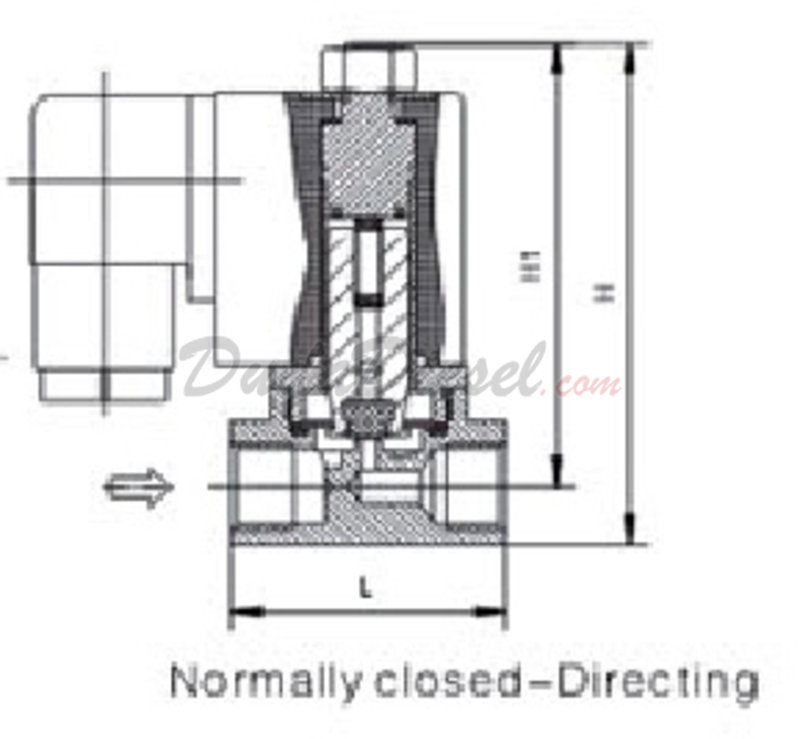 solenoid valve drawing
